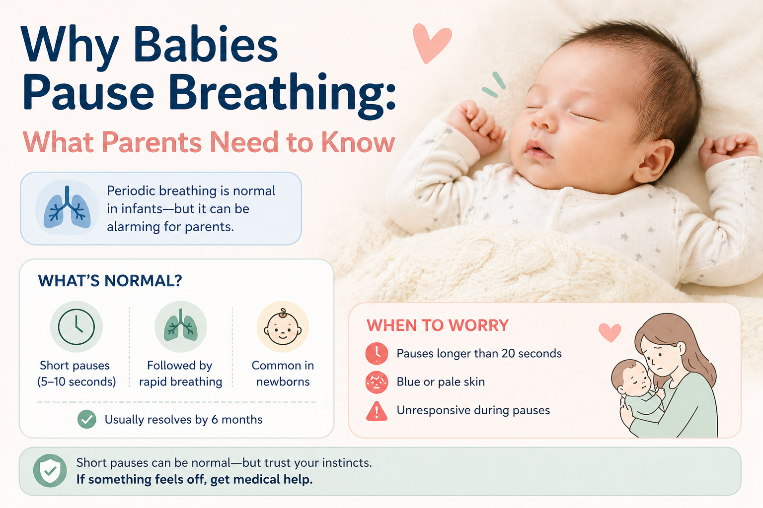
Important: This page is educational and not a diagnosis. If your baby has long pauses in breathing, turns blue or pale, is unresponsive, or seems very unwell, seek urgent medical care immediately.
Why Babies Pause Breathing: What Parents Need to Know
If you’ve ever watched your baby sleep and suddenly noticed a pause in their breathing, your heart probably skipped a beat.
You’re not alone.
Many parents search:
- “why does my newborn stop breathing for a few seconds?”
- “is it normal for babies to pause breathing?”
- “newborn irregular breathing while sleeping”
The truth is:
👉 Short pauses in breathing (called periodic breathing) are often completely normal in newborns.
This guide explains:
- why babies pause their breathing
- what normal periodic breathing looks like
- when to worry
- and how to tell the difference between safe vs dangerous patterns
What is periodic breathing in babies?
Periodic breathing is a common breathing pattern in newborns where:
- Baby pauses breathing for a few seconds
- Then breathes faster for a short period
- Then returns to normal
It can look irregular—but in most cases, it’s part of normal development.
Why do babies pause their breathing?
This is one of the most common concerns for new parents.
1) Immature breathing control
Your baby’s brain is still learning how to regulate breathing smoothly.
This can lead to:
- short pauses
- uneven rhythms
- bursts of faster breathing
2) Active sleep cycles
Newborns spend a lot of time in active (REM) sleep, where breathing can be irregular.
You might notice:
- twitching
- small noises
- changes in breathing speed
3) Developing nervous system
The systems that control breathing are still maturing in the first months of life.
This is why periodic breathing is most common in:
- newborns
- babies under 6 months
What does normal periodic breathing look like?
Most babies will show this pattern at some point.
Signs of normal periodic breathing:
- Pauses lasting 5–10 seconds
- Breathing resumes on its own
- Baby remains pink and comfortable
- No signs of distress
- Happens mostly during sleep
💡 It may look scary—but if your baby looks comfortable, it’s usually normal.
When baby breathing pauses are NOT normal
While periodic breathing is common, some signs need immediate attention.
🚨 Red flags: seek urgent medical care if you notice
- Pauses longer than 20 seconds
- Baby turns blue, grey, or very pale
- Baby becomes limp or unresponsive
- Struggling to breathe (chest pulling in, flaring nostrils)
- Repeated episodes with distress
These could indicate a more serious condition like apnea and should not be ignored.
Periodic breathing vs apnea: what’s the difference?
This is a major source of confusion.
| Periodic Breathing (Normal) | Apnea (Concerning) |
|---|---|
| Short pauses (5–10 sec) | Longer pauses (20+ sec) |
| Baby resumes breathing on their own | May need stimulation |
| Baby stays pink | Color may change (blue/pale) |
| No distress | Often with distress or limpness |
| Common in newborns | Needs medical evaluation |
When does periodic breathing stop?
Parents often ask:
“When will my baby stop doing this?”