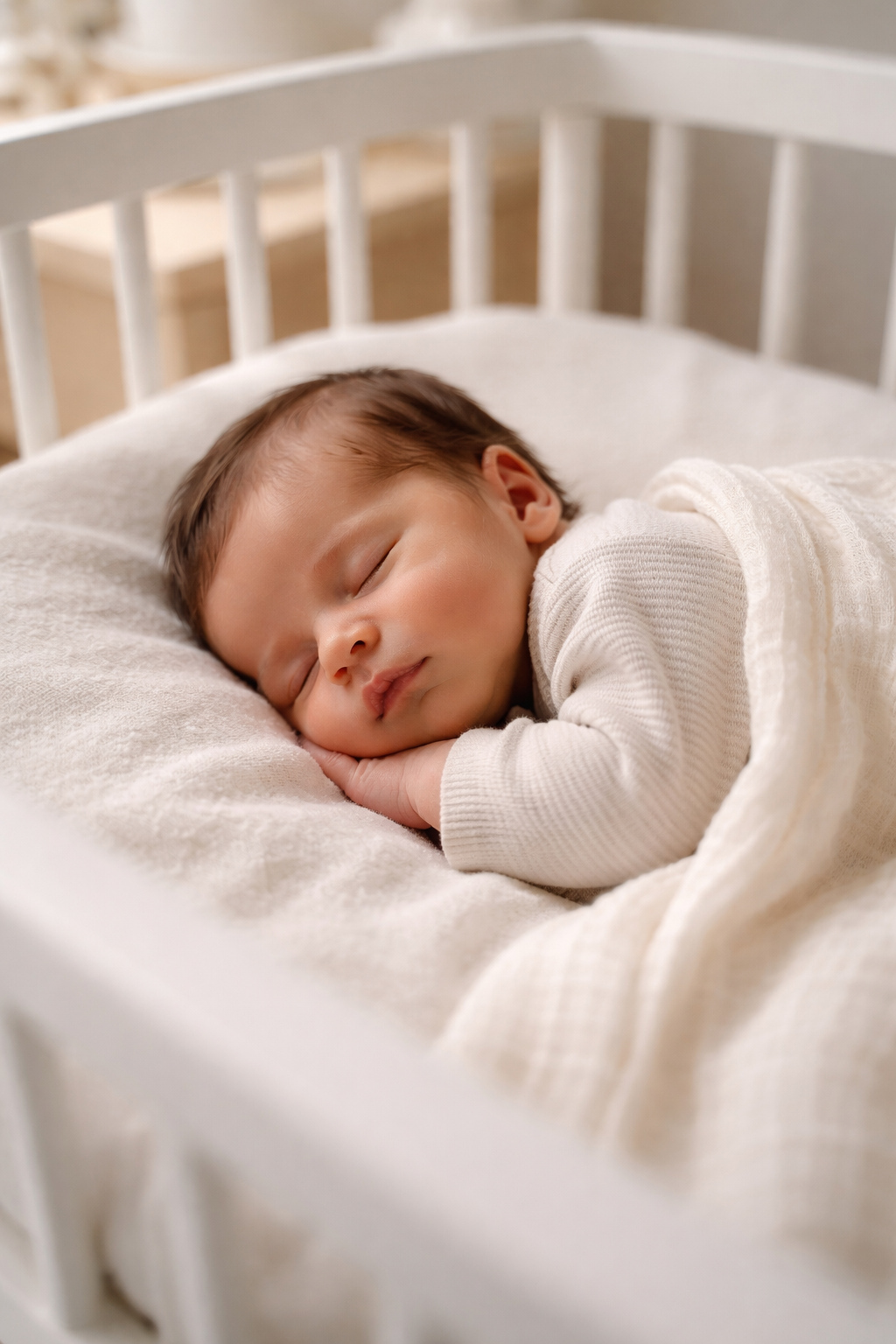
Important: This page is educational and not a diagnosis. If your baby is struggling to breathe, turning blue/grey, feeding poorly, or seems very unwell, seek urgent medical care.
Why Do Newborns Grunt While Sleeping?
If you’re hearing your newborn grunt, strain, squirm, or make tiny “ugh/ehh” sounds in their sleep, you’re not alone—and most of the time, it’s normal.
Newborns are often noisy sleepers. Their breathing patterns are different from adults, their digestion is brand-new, and they’re still learning how to coordinate basic things like pooping, passing gas, swallowing, and breathing smoothly. The result can sound intense at 2:47am… even when everything is fine.
Let’s break down the most common reasons, what’s normal, and when grunting is a sign you should get help.
The 3 most common (normal) reasons newborns grunt in sleep
1) They’re learning to poop (yes, really)
One of the most common causes is infant dyschezia (sometimes casually called “grunting baby syndrome”).
This happens when a baby hasn’t yet learned how to coordinate pushing with relaxing—so they strain, grunt, turn red, and look uncomfortable… then pass a soft, normal stool. It can last 10–30 minutes and looks stressful, but it’s usually a coordination issue rather than constipation.
Clue it’s this: baby strains/grunts, face turns red, legs kick, then poop is soft or seedy (not hard pellets).
2) Normal newborn breathing patterns can sound weird
Newborn breathing isn’t always smooth and quiet. Many babies do periodic breathing—short pauses followed by a few faster breaths to “catch up.” Brief pauses can be normal when baby seems comfortable.
Also: newborn airways are small, so normal airflow can sound louder than you expect.
Clue it’s normal: baby is pink, comfortable, feeding well, and the grunting isn’t happening with every single breath.
3) They’re moving between sleep stages (active sleep is LOUD)
Newborns spend a lot of time in “active sleep” (similar to REM). During this stage they may:
- grimace
- twitch
- squirm
- grunt or sigh
- briefly cry out
It can look like they’re waking up… then they settle again.
Clue it’s active sleep: eyes stay closed most of the time, and baby settles without fully waking.
When newborn grunting is NOT normal
Here’s the key distinction:
✅ Normal grunting
- happens occasionally
- often happens around gas/poop
- baby is otherwise well: feeding, waking, and gaining weight
🚨 Concerning grunting (get checked)
Grunting that happens with each breath, or along with signs of breathing difficulty, can mean your baby is working harder to breathe and should be assessed by a clinician.
Red flags: seek urgent care now
Seek urgent medical help if your baby has any of these:
- Blue/grey lips or skin
- Breathing very fast or struggling to breathe
- Skin pulling in around the ribs/neck (retractions), or nostrils flaring
- Grunting that happens with every breath, especially if baby looks distressed
- Baby is unusually sleepy/weak, feeding poorly, or seems seriously unwell
If you’re ever unsure, it’s okay to be cautious. With newborn breathing, trust your instincts.